

A commercial fence has a fairly simple job on paper: define the property and help control access.
However, in practice, there is a lot more to consider.
A warehouse may need a strong perimeter that still allows clear visibility across the property. An apartment community may care about security and appearance equally. A school, storage yard, retail property, or office building can have completely different requirements.
That is why choosing commercial fencing in Washington should start with the property’s purpose, not with a particular fence style.
For businesses in Pierce County, Kitsap County, and the surrounding Puget Sound area, weather, site layout, traffic, security needs, and local requirements can all influence the best choice.
Start With Your Fence’s Purpose
Before comparing materials, think about the problem you are trying to solve.
Are you trying to keep people away from equipment? Control where customers and employees enter the property? Create privacy around a storage area? Improve the appearance of the building from the street?
For many commercial properties, the answer is a combination of several things.
A fence may need to provide one or more of the following:
- Perimeter security
- Controlled vehicle or pedestrian access
- Privacy
- Separation between public and restricted areas
- Protection for equipment or inventory
- A safer environment for employees or visitors
- Better curb appeal
The clearer you are about the purpose, the easier it becomes to choose the right fence. Our commercial fencing services start with exactly this conversation before any material is recommended.
Commercial Fence Materials at a Glance
Most commercial projects in Western Washington come down to three broad categories. Here is how they compare before we look at each one in detail.
| Fence Type | Best For | Visibility | Maintenance | Relative Cost |
|---|---|---|---|---|
| Chain link (galvanized or vinyl-coated) | Warehouses, yards, job sites, schools, utility properties | High — clear sightlines | Low | $ |
| Chain link with privacy slats | Dumpsters, storage, loading and service areas | Screened | Low | $$ |
| Ornamental steel or aluminum | Offices, multifamily, medical, retail, community facilities | High — open picket design | Low | $$$ |
| Wood / solid panel | Screening where a softer look is wanted | Full privacy | Higher in a wet climate | $$ |
Chain Link Fencing: Practical and Versatile

Chain link is one of the most common choices for commercial and industrial properties, and for good reason.
It is durable, relatively economical for larger areas, and does not block visibility around the site. Washington fence contractors commonly install galvanized and vinyl-coated commercial chain link fencing for commercial properties, job sites, storage yards, and other facilities that need a reliable perimeter.
Chain link styles can work especially well for:
- Warehouses
- Equipment yards
- Storage facilities
- Construction sites
- Schools
- Utility properties
- Commercial parking areas
It can also be adapted to the property. Black vinyl coating gives it a cleaner appearance, while privacy slats can reduce visibility into areas that should stay out of view.
For businesses focused on function and cost control, chain link is often one of the first options worth considering. If you are weighing it for a smaller site, our guide on whether a chain link fence is right for your home or business covers the tradeoffs in more depth.
Ornamental Metal Fencing: Security With a More Finished Look

Some businesses need a fence that looks as good from the street as it performs around the perimeter.
That is where ornamental steel or aluminum fencing can be a strong option.
Commercial properties throughout Washington use ornamental fencing around offices, apartment communities, schools, public facilities, and customer-facing businesses because it creates a defined boundary without making the property feel closed in. Regional commercial fencing companies often recommend ornamental steel over chain link where appearance, access control, and security all matter at once.
It is especially useful for:
- Office buildings
- Multifamily properties
- Medical offices
- Schools
- Churches
- Retail properties
- Community facilities
Ornamental fencing usually costs more than basic chain link, but it can be a better fit when the fence is highly visible or contributes to the overall appearance of the site. For a closer look at that tradeoff, see our comparison of commercial fencing: security vs. aesthetics.
What Makes a Good Commercial Security Fence?
A commercial security fence should discourage unauthorized access without creating problems for the people who are supposed to use the property.
Height and material matter, but so do the details.
Gate placement, fence visibility, lighting, cameras, vehicle access, and the layout of the building can all affect how well the perimeter works.
For example, a tall solid fence may provide privacy, but it can also create blind spots. A chain link or ornamental fence allows more visibility, which can be useful when cameras or employees need a clear view of the perimeter.
The most effective security setup usually considers the entire property rather than treating the fence as a stand-alone feature — a point we cover in detail in how commercial fencing protects your business and deters intruders.
Think About Gates Early
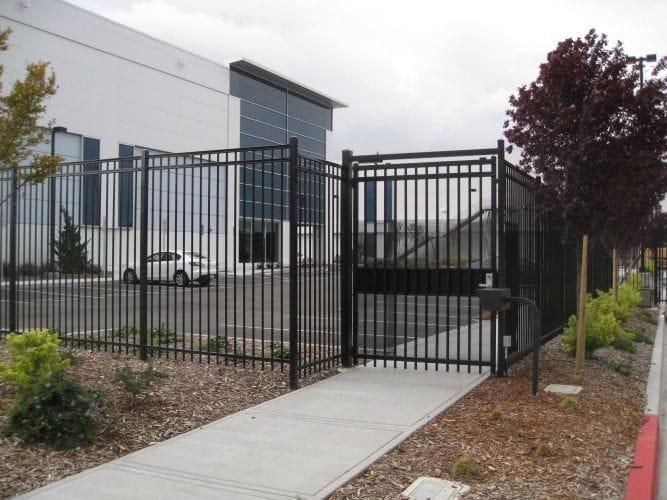
Gates are one of the easiest parts of a commercial fence project to underestimate.
A business may need separate entrances for employees, delivery trucks, customers, maintenance crews, or emergency access.
Before commercial fence installation in Washington begins, it helps to think through questions such as:
- How wide do vehicle gates need to be?
- Will delivery trucks need extra turning room?
- Should pedestrians have a separate entrance?
- Will gates be opened manually or automatically?
- Is keypad, card, or controlled access needed?
- Where will snow, landscaping, or parked vehicles affect gate movement?
A poorly placed gate can become an everyday frustration. A well-planned one tends to disappear into the normal flow of the business.
Privacy May Matter More Than You Think
Not every business needs full privacy, but some areas benefit from it.
Dumpsters, equipment storage, loading areas, utility zones, and outdoor workspaces are not always something a business wants fully visible from the street.
Privacy slats can be added to chain link, while wood or solid-panel fencing may be appropriate in other settings. You can see examples of both in our project gallery.
The key is deciding where privacy is useful and where visibility is more important.
For example, blocking the view of a storage area may improve appearance and security. Blocking the view near a driveway or intersection can create a safety concern.
Washington Weather Should Be Part of the Decision
The wet climate in Western Washington can take its toll on outdoor structures.
Rain, damp soil, moss, and seasonal weather can all affect the life of a fence. That makes material selection and installation quality especially important.
Galvanized and coated chain link are popular partly because they require little maintenance. Ornamental metal fencing can also perform well when it has a quality protective finish.
Wood can be a good choice for privacy or appearance, but it typically requires more maintenance in a wet climate.
A good commercial fence contractor in Washington should be able to explain how the material, posts, coatings, drainage, and site conditions affect long-term performance.
Site Conditions Can Change the Project
Two commercial properties with the same fence length can require very different installations.
A flat industrial lot with open access is fairly straightforward. A property with slopes, retaining walls, narrow access, utilities, landscaping, or heavy vehicle traffic can take much more planning.
Before installation, it is worth looking at:
- Ground conditions
- Drainage
- Slopes
- Existing concrete
- Utility locations
- Delivery access
- Vehicle circulation
- Landscaping
- Property boundaries
- Easements
These details often affect both the cost and the final design. If you are budgeting a project, our breakdown of fence installation cost in Washington explains how site conditions move the number.
Do Commercial Fences Require Permits in Washington?
Permit rules depend on the local jurisdiction, fence height, location, and type of construction.
| Jurisdiction | When a permit is generally required |
|---|---|
| Tacoma | Fences over 7 feet high (masonry walls over 4 feet) |
| Pierce County | Fences greater than 6 feet high |
| Seattle | Fences up to 8 feet are generally allowed without a permit, provided masonry or concrete elements do not exceed 6 feet |
That variation is a good reminder that there is no single rule for every commercial property in Washington.
Businesses may also need to consider:
- Setback requirements
- Critical areas
- Easements
- Corner visibility
- Fire access
- Property-line restrictions
- Local zoning standards
Before construction begins, it is worth confirming the requirements for the specific property.
How Much Maintenance Are You Willing to Take On?
Maintenance is easy to overlook when comparing fence options.
Chain link is generally one of the simplest choices to maintain. Occasional cleaning and attention to damaged sections may be all that is needed.
Ornamental metal also tends to be relatively low maintenance, although scratches or damaged coatings should be addressed before corrosion develops.
Wood fencing needs more attention, especially in Western Washington. Staining, sealing, cleaning, and replacing individual boards may be part of the long-term maintenance plan.
Businesses should think about total ownership cost, not only the installation price.
Appearance Matters for Customer-Facing Properties
A fence around a warehouse and a fence in front of an office building do not have to look the same.
For customer-facing businesses, the fence becomes part of the property’s first impression.
A black ornamental fence may complement a professional office or apartment building. Black vinyl-coated chain link can look cleaner and less industrial than standard galvanized material. Wood can create warmth and privacy in the right setting.
There is no need to overdesign it. The goal is simply to choose a fence that fits the building and the surrounding property.
Choosing a Fencing Company in Washington
When comparing a fencing company in Washington, look beyond the price per foot.
Commercial projects often involve more planning than residential installations because they have to account for operations, access, safety, and site conditions. Knowing what to expect during a professional fence installation makes those conversations easier.
It is worth asking potential contractors:
- What type of commercial projects do you regularly install?
- How will you handle gates and vehicle access?
- What materials make sense for this property?
- How will the fence perform in local weather?
- Are removal and cleanup included?
- How are changes in slope handled?
- Are permits required for this project?
- What warranty is provided?
A good contractor should be able to explain why a particular fence is being recommended, not simply tell you which one costs less. Kelly Fencing has been licensed, bonded and insured and serving Puget Sound businesses since 1990.
Choosing the Right Commercial Fence for Your Property
There is no single best commercial fence for every Washington business.
Chain link is often the practical choice for larger properties, storage yards, industrial areas, and businesses that want a durable perimeter at a reasonable cost.
Ornamental metal makes more sense when appearance and security need to work together.
Privacy fencing can be useful for screening equipment, service areas, or other spaces that customers do not need to see.
In some cases, the right answer is a combination of materials. A property might use ornamental fencing near the main entrance and chain link around less visible portions of the site.
That approach can keep the project practical without sacrificing appearance where it matters most. Businesses in the South Sound can also read our commercial fencing guide for Pierce and Kitsap County businesses for a more local view.
Final Thoughts
Choosing commercial fencing in Washington comes down to understanding how the property works.
Security is important, but so are traffic flow, gate access, visibility, privacy, weather resistance, maintenance, and appearance.
Taking time to think through those details before installation usually leads to a fence that works better for the business over the long term.
Kelly Fencing works with commercial properties throughout Pierce and Kitsap counties, installing chain link and other fencing solutions for businesses that need dependable perimeter control. If you are planning a new fence, an on-site evaluation can help determine which material and layout make the most sense for the property. We also handle residential fencing and the full range of fencing services across the Puget Sound region.
Commercial Fencing in Washington: FAQs
What is the best type of commercial fence for a business in Washington?
There is no single best option. Chain link is usually the practical choice for warehouses, storage yards, job sites, and large perimeters where cost and durability matter most. Ornamental steel or aluminum is a better fit for offices, apartment communities, medical buildings, and retail sites where the fence is visible to customers. Many properties combine both — ornamental at the entrance, chain link around the rest of the site.
Do commercial fences need a permit in Washington?
It depends on the jurisdiction and the fence height. Tacoma requires a building permit for fences over 7 feet, Pierce County for fences greater than 6 feet, and Seattle generally allows fences up to 8 feet without a permit as long as masonry or concrete elements stay under 6 feet. Setbacks, easements, critical areas, corner visibility, and fire access can apply regardless of height, so confirm the rules for the specific address before construction.
How tall should a commercial security fence be?
Height is only one part of it. Many commercial perimeters use 6 to 8 feet, but permit thresholds, setbacks, and local zoning often set the practical ceiling. Gate placement, sightlines for cameras and staff, lighting, and vehicle circulation usually affect real-world security as much as the extra foot of height does.
Is chain link or ornamental fencing better for a commercial property?
Chain link costs less per foot, covers large areas efficiently, and keeps sightlines open — ideal for industrial and back-of-house areas. Ornamental metal costs more but reads as finished and professional, which matters where the public sees it. If the fence fronts a street or entrance, ornamental usually earns its price difference; if it surrounds a yard, chain link usually does.
How does Washington weather affect a commercial fence?
Rain, damp soil, and moss are the main concerns in Western Washington. Galvanized and vinyl-coated chain link and properly finished ornamental metal hold up well with little maintenance. Wood performs adequately but needs staining, sealing, and occasional board replacement. Post depth, footing quality, and drainage matter as much as the material itself.
What should I ask a commercial fence contractor before hiring?
Ask what commercial projects they install regularly, how they will handle gates and vehicle access, which materials suit the site, how the fence will perform in local weather, whether removal and cleanup are included, how slopes are handled, whether permits are needed, and what warranty is provided. A contractor who can explain the reasoning behind a recommendation is usually a safer choice than the lowest bid.